Palestinian Political Suicide: Between October 7, 2023, and the Elections of November 28, 2026
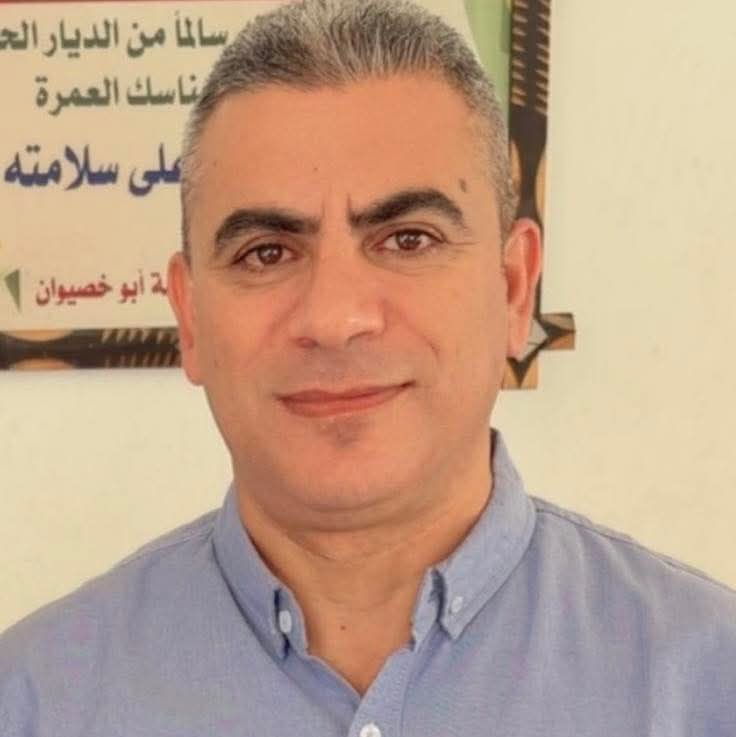
Ashraf Abu Khusayan, Public Policy Advisor
Introduction:
The decision to hold Palestinian legislative elections on November 28, 2026, comes in a political and security environment that does not appear fundamentally different, in terms of a deadlock, from the environment that preceded the explosion on October 7, 2023. The Palestinian presidency has announced that the elections will take place as scheduled, while the Central Elections Commission has set detailed dates for candidacy, campaigning, and voting.
Comparisons:
However, the comparison between the two dates reveals a serious paradox. In October 2023, Gaza was experiencing a siege, political division, and a lack of negotiating prospects, while the West Bank was suffering from the expansion of settlements, Israeli violence, and a crisis of trust in the authority.
After nearly three years, the scene has become more complicated: the war and its aftermath of destruction, the continuation of settlement expansion, the rise in settler violence, the imposition of movement restrictions, and the expansion of Israeli control projects over the land. At a time when the United Nations continues to warn (August 2026) that the situation in the West Bank has reached a breaking point, indicating the push or approval of about 12,360 settlement units since the beginning of the year, in addition to allocating $431 million to support the establishment of 34 new settlements.
If October 7 represents political suicide in Gaza, then the announcement of holding legislative elections in the West Bank is another form of political suicide, albeit with a difference in timing and method. From here, one can understand the description of the elections as a gamble that could turn into political suicide, not because the elections themselves are a mistake, but because the authority may seek to renew its legitimacy at a moment when it lacks the necessary tools to protect its results or transform them into a political path that ends the occupation and division. If the Palestinian discussion becomes confined to the question of who governs? Fatah or Hamas?, the political responsibility may shift from confronting the occupation and settlements to an internal struggle over legitimacy and governance, while the Israeli realities on the ground continue.
Opinion Polls:
The danger of this possibility is exacerbated by the internal trust crisis. A poll conducted by the Palestinian Center for Policy and Survey Research in August 2026 showed that 79% want President Mahmoud Abbas to resign, and 44% say that neither Fatah nor Hamas deserve to lead the Palestinians. Among potential voters, Fatah receives 32%, Hamas 29%, and third forces 18%. This means that the elections may not merely renew the binary conflict but could test the collapse of the traditional political model itself.
Leadership Crisis within Fatah:
Within Fatah, additional indicators of a leadership crisis are emerging. Jibril Rajoub and Mahmoud Aloul boycotted meetings of the new Central Committee in protest against the management of files and the election of Hussein Al-Sheikh as deputy head of the movement. Rajoub himself described the boycott as a protest step due to what he considered a departure from the movement's traditions and democratic legacy, while reports indicated that the distribution of commissions remained a point of contention.
Are the elections a maneuver to consolidate Fatah in the West Bank?
Here, a potential political maneuver emerges that can be analyzed, though not proven as a definitive fact: when disagreements within Fatah widen, invoking the danger of Hamas, or discussing the strength of Mohammed Dahlan and his influence, becomes a possible means to regroup the Fatah current around the central leadership. In other words, the external danger or internal competitor may turn into a tool for managing internal disagreements. Perhaps President Abbas uses the stick of elections, waving it before the Central Committee.
The real danger, then, is not in the ballot box, but in what comes after it. If the elections produce a divided parliament, or prevent the participation of major forces, or if Israel rejects the results, or if the authority fails to manage the repercussions, the elections could become a new factor for igniting the Palestinian arena.
In 2023, Gaza exploded because politics lost its ability to produce an exit; and in 2026, the danger may be that Palestinians are asked to resolve a political and security crisis with their votes that exceeds the capacity of any elections to solve.
From here, the elections will not be political suicide if they are part of a re-establishment of the Palestinian political system that includes the PLO, the presidency, the legislative council, ending the division, renewing leadership, and redefining the relationship between the authority and the factions. However, if they are merely a mechanism to renew the status quo and redistribute legitimacy between Fatah and Hamas, they may turn into a recycling of the crisis, and perhaps into collective political suicide that does not only cost Fatah or Hamas, but the entire Palestinian society will pay the price.
Abbas may have come to the conclusion that the tools of the traditional political path are no longer capable of producing a Palestinian state on their own, and that elections can become a means to reproduce Palestinian legitimacy, shifting the cost of political deadlock onto Israel and the international community, while accepting the risks that the elections may produce a new political force that he cannot control.