From the Ballot to Change: Can Elections Reshape the Palestinian Political System?
A socio-political article in light of youth opinion poll indicators in the Gaza Strip
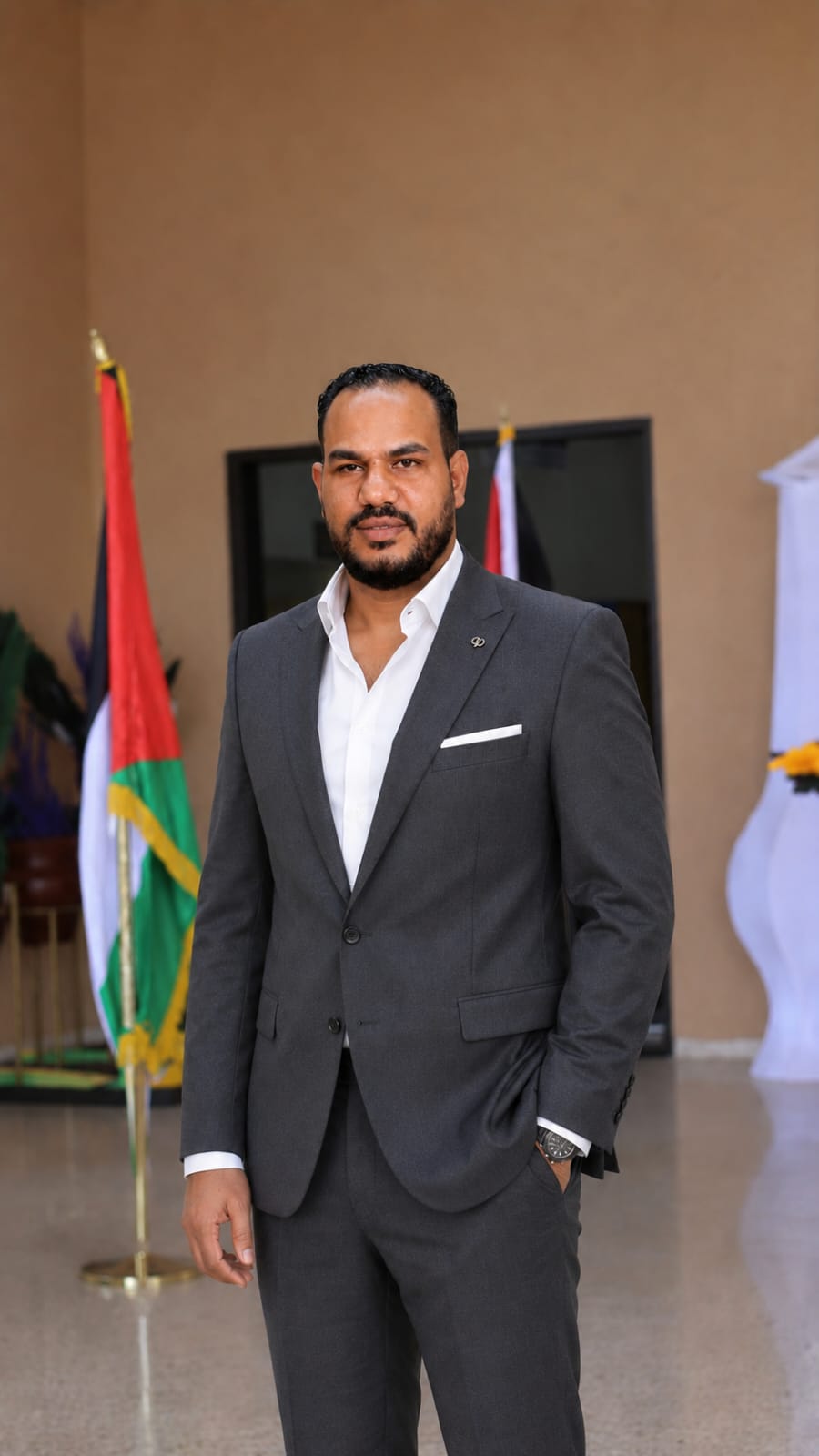
By Dr. Abdul Karim Abu Mustafa
In societies that have experienced long political stability, elections may be a natural periodic procedure: parties compete, voters choose, and a new government or parliament is formed. However, in the Palestinian case, going to legislative elections after many years of disruption in the electoral process transcends the issue of selecting new legislative council members; it raises a larger question concerning the political system itself: Can widespread popular participation transform the upcoming elections from merely an electoral entitlement into a genuine entry point for changing the way politics, power, and representation are managed in Palestine?
The question becomes more significant when viewed from the perspective of youth. This generation has lived through division, the disruption of elected institutions, repeated wars, economic and social crises, and declining job opportunities. In Gaza specifically, they have experienced war, destruction, displacement, loss of security, and deteriorating basic living conditions. Therefore, their relationship with elections cannot be interpreted in the same traditional way. They are not just looking for a political representative but seeking an answer to a question that is both simple and complex: Can my voice change something in my life?
Here, the results of a survey conducted by the Research and Studies Unit at the Youth Future Rescue Association in mid-August 2026 provide a noteworthy indicator. The survey included 425 Palestinian youth from various areas in the Gaza Strip, with the age group of 25-34 years being the largest at 54.6%, followed by the 18-24 age group at 32%. This sample alone does not allow for generalizing the results to the entire Palestinian community, but it provides an important social and political indicator of the trends among a segment of Gaza's youth, especially when we look at the relationships between the numbers rather than each percentage in isolation.
The first paradox: Trust in the ballot and a crisis of trust in parties
The most striking revelation from the results is not a single number but a notable political paradox. 88.5% of participants supported holding legislative elections on time, and 68.2% stated they would definitely participate. When adding those who answered that they "might participate," the potential participation rate rises to 88.9%. These are very high percentages in terms of political readiness. However, when moving to the question of trust in parties, the picture changes sharply: 49.4% of participants said they do not trust any political party, compared to only 9.6% who have great trust. Here, we may find an important key to understanding the youth mood. Young people do not necessarily reject politics, nor do they reject elections, and they do not seem to have withdrawn from the public sphere; rather, a significant segment of them wants to participate but does not automatically grant their trust to existing political forces. This is a fundamental difference. The crisis of the political system may not be a crisis of apathy towards participation as much as it has become a crisis of representation and trust. There are those who want the ballot box, but they are looking for options worthy of placing inside it.
A generation wanting change... but no longer believing in absolute promises
When participants were asked about the ability of elections to bring about real change in the political system, 39.5% expected real change, while 48% believed elections might bring about change "to some extent," compared to 12.5% who do not expect real change. These numbers say something extremely important. There is hope, but it is conditional hope. The majority does not view elections as a magic wand that will change the political system the next morning, but at the same time, they do not see participation as futile. This space between hope and doubt may be politically more mature than the belief that elections will fix everything or that they will change nothing. Elections can open the door to change, but they cannot alone guarantee what will happen after it is opened.
When daily life becomes a political program
The most important aspect of the survey appears when asking youth: On what basis will you choose? The reconstruction of Gaza came first among the determinants of choice at 40.9%, followed by improving the economic situation at 29.4%, and combating corruption at 10.6%. When asked about the priorities of the upcoming legislative council, reconstruction also topped the list at 30.8%, followed by combating corruption at 22.8%, and enhancing national unity at 18.8%. These numbers are not just a ranking of priorities. They may reflect a deeper change in the meaning of politics for youth. Politics here is no longer an abstract discourse; it has become linked to housing, work, income, reconstruction, integrity, unity, and the institution's ability to solve problems. In simpler terms: youth want politics whose results can be seen in their lives. This may impose an important shift on the lists and candidates themselves. The question that has long circulated: "Who do you represent?" or "Which current do you belong to?" can be rivaled by another, more challenging question: What can you do? How will you deal with reconstruction? How will you confront unemployment and poverty? How will you monitor public funds? How will you confront corruption? How will you contribute to ending division? And what can citizens hold you accountable for after your election? When voters start asking these questions, change begins before the ballot boxes are opened.
Youth do not just want a seat... they want impact
The survey also reveals a gap in the issue of youth representation. While 41.4% felt that youth are adequately represented, 32.2% considered their representation insufficient, and 26.4% said it is partial. This means that 58.6% of participants do not consider youth representation complete or sufficient. But the issue is deeper than the number of youth present on the lists. An electoral list may include dozens of youth without carrying a single youth project. Youth may be placed in late positions that do not give them a real chance to reach. Their presence may turn into a means to beautify the image while the decision-making process remains confined to the same traditional circles. Therefore, it is essential to distinguish between youth representation and youth empowerment. Representation means that the youth are present. Empowerment means that they are capable of influencing decision-making, legislation, oversight, and accountability. This may be one of the most important battles of the upcoming elections.
Do elections change the system or just the names within it?
Here we reach the central question. It is not enough to hold elections to say that political change has occurred. The names of deputies can change while the management style of institutions remains the same. Young faces may enter while the old political mentality continues. Many lists may compete without any real difference in programs. Therefore, real change is not measured only by who wins, but by what will change after their victory. Here, we can distinguish between two levels: Changing people means bringing in new names, lists, and faces. Changing the political system means restoring the status of elected institutions, enhancing oversight, activating accountability, raising citizens' ability to influence, renewing elites, and linking political power to the popular will periodically. If the first occurs without the second, we will be faced with elections that produced a new council. However, if both occur together, we may be at the beginning of a real political transformation.
Participation is not just a piece of paper placed in the box
For this reason, it would be a mistake to reduce political participation to election day. Change requires a complete cycle that begins before the elections and does not end with the announcement of results. It starts with questioning the candidate, their program, history, competence, and integrity, then conscious selection, followed by monitoring the electoral process. After winning, the more challenging phase begins: following up on the performance of deputies and lists, holding them accountable, and comparing their promises with what they have accomplished. Thus, the citizen's voice becomes a political contract rather than a blank check. This culture specifically is what can change the political system in the long term. Democracy is not only the citizen's right to choose who governs them but also their ability to monitor, hold accountable, and replace them.
What if youth participate en masse?
If actual behavior approaches the high readiness for participation demonstrated in the survey, the youth bloc can become an important element in the electoral competition. However, its real strength will not come from numbers alone. It will come from its ability to turn its demands into electoral criteria. If voters reward the most competent candidate, lists will seek out competencies. If they reward the candidate with a realistic economic program, lists will be forced to develop their programs. If they reject corruption, integrity will become an electoral value with a price. If they refuse to use youth merely as a facade, political forces will be compelled to present them in actual decision-making positions. Here, the voter can change the behavior of politicians before politicians change the system. This is one of the most important hidden powers of elections.
The most dangerous thing the numbers say
Perhaps the most dangerous message in the survey is the combination of three results: 88.5% support holding elections. 88.9% represent the circle of confirmed or potential participation. At the same time, 49.4% do not trust any party. This equation should not pass unnoticed by Palestinian political forces. It indicates, within the limits of the sample, the existence of an electoral energy that does not necessarily find its full representation within the traditional party map. This can turn into either an opportunity or a crisis. If parties and lists respond to this mood with genuine renewal, presenting competencies, youth, women, and experienced individuals, and building programs that respond to reconstruction, the economy, corruption, and unity, they may regain some of the lost trust in politics. However, if elections are treated merely as a reproduction of traditional competition, the gap between society and its political institutions may widen.
Gaza is not looking for slogans
After all that the Gaza Strip has experienced, it is difficult to ask people to approach the elections in the same way they did in previous stages. The citizen who has lost their home or source of income, the youth waiting for a job opportunity, and the family searching for security and stability will not separate their political question from the question of life. Therefore, reconstruction, the economy, combating corruption, and national unity have come to the forefront of concerns. These are not sectoral demands. They are, in essence, demands to redefine the function of politics itself. Politics that cannot approach the citizen's livelihood gradually turns into a discourse distant from it, while politics that links public decision-making to people's lives regains its social meaning.
Who changes whom: elections or society?
It may be a mistake to expect elections to change society and the political system automatically. The relationship works both ways. Society itself determines the type of elections it will have. If it votes based on tribalism, it will reproduce it. If it votes based on blind loyalty, it will reproduce it. If it votes based on program, competence, and integrity, it will gradually push the political system towards these standards. Therefore, the real question is not only: Can elections change the Palestinian system? But: Can the Palestinian voter use elections to change the rules of the political game? Here, youth become a crucial element; they represent a broad space whose political relationship has not fully formed within the old molds, and their demands, as the survey results suggest, lean significantly towards practical, living, and reform issues.
The possible change
It is important not to burden elections with more than they can bear. One ballot paper will not end division, will not rebuild Gaza, will not fix the economy, and will not eradicate corruption in one day. But elections can do something that perhaps precedes all that: return the citizen to the center of the political equation. They can restore the idea that legitimacy needs people, that public office is contestable, that the political representative must return to the voter, and that the new generation can enter the public sphere through popular will rather than waiting for permission from existing elites. From here begins the possibility of real change. Not because the ballot box has magical power, but because millions of individual decisions, when gathered, can redistribute political power.
Conclusion: From participation in the system to participation in changing it
The results of the youth survey in Gaza do not provide a prophecy about the outcome of the elections, nor can a sample of 425 youth be considered representative of the entire Palestinian community. However, they provide a political and social signal that is difficult to ignore. There is a high desire for elections. There is a clear readiness to participate. There is a real crisis of trust towards parties. There is a feeling of inadequate youth representation. And there is a clear shift in priorities towards reconstruction, the economy, combating corruption, and national unity. When these indicators come together, we may be facing a generation that does not want to withdraw from politics but wants to redefine it. A generation that tells political forces, in one way or another: It is not enough to ask for our votes; tell us what you will do with them. It is not enough to place youth in campaign images; place them in decision-making positions. It is not enough to talk about the homeland; provide solutions for people's lives within it. It is not enough to hold elections; there must be meaning to what comes after. Therefore, the ability of the upcoming elections to create real change in the Palestinian system will not be determined solely on the day of the results announcement but by the quality of participation that precedes it and the extent of accountability that follows it. If the citizen enters the elections as a follower, they may reproduce the system as it is. However, if they enter as a rightful owner, a decision-maker, and someone capable of accountability, the ballot can become more than just a means of selecting deputies; it can become a tool for reshaping the relationship between society and authority. Here lies the greatest opportunity for the upcoming elections: that Palestinians do not just participate in the political system but also participate, through their voices, awareness, and accountability, in changing it.