Let’s try another solution. We have tried conferences, development plans, workshops, and strategies that often begin with the phrase "enhancing resilience," and then end with a group photo in front of a large banner, and everyone goes back home. Poverty, unfortunately, does not return home. It stays in its place.
So let’s cut to the chase: let’s kill the poor.
The idea seems brutal, but mathematically it’s excellent. If the poor disappear, the poverty rate immediately drops. No need to raise wages, no need to lower prices, no need to ask the heavy question: where do the budgets go? Or why do some official cars grow while people’s tables shrink?
We will be relieved. And the numbers will also be relieved.
Ahmed Fouad Negm and Sheikh Imam reached this black genius decades ago in "Boutiques." The logic of sarcasm was simple and frightening: "Let’s kill all the hungry." Instead of asking why people are hungry, get rid of the hungry person himself, and the problem is solved.
And we, to be fair, have developed the idea a lot.
No one kills the poor today. That is a primitive act and unworthy of the age of institutions, development, and governance. We are more sophisticated than that.
We kill him through installments.
Prices rise, so we explain to him that the crisis is global. His salary freezes, so we ask him to understand the circumstances. Taxes, fees, and bills come one after another, and then we sit with him lovingly and advise him to learn how to manage his income.
And if he has anything left at the end of the month, that’s a good sign: the situation is not as bad as people claim.
And if he has nothing left, the problem is with him.
Why does he drink coffee? Why does he carry a good phone? Why did he go out with his children? And why doesn’t he eat lentils more? And anyway, who said that a person has to live every day?
The funny thing is that the poor is always required to look poor so that we believe him. He has to wear his poverty in front of us. Anything small he does to feel like a human can turn into evidence against him.
And unemployment has the same recipe.
Instead of asking why the economy fails to produce enough job opportunities for people, we ask the young man: why didn’t you find a job? If he finds a job with a salary that doesn’t cover his transportation, we tell him: start from somewhere. If he stays in it for years and nothing changes, we say: improve yourself. If he travels in search of an opportunity, we stand angrily talking about youth migration and the absence of belonging.
In all cases, the citizen is required to find the solution.
As for the state, the institution, the market, decision-makers, and economic policies, these are big and complex things, and it is inappropriate to disturb them whenever someone’s life becomes difficult.
And even if this person needs help, we do not fall short. We give him a three-copy form and ask him to prove that he is really poor. An ID photo, proof of income, proof of no income, signature, stamp, and maybe a paper proving that the previous paper is original. Then he goes from office to office until he almost forgets why he came.
And if he gets angry? Here the problem becomes about his morals.
We do not deprive him of his right, of course. We just ask him to prove his need ten times. And in another part of the city, much bigger matters can be solved with a single phone call.
There is no contradiction here.
Equality for us is excellent on paper. Paper specifically does not complain.
And the housing crisis? It’s easy too. Whoever cannot buy a house, does not buy. And whoever cannot pay rent goes back to his parents’ house. And if his siblings returned before him and there is no room left in the house, we can consider that a sign of the strength of Palestinian family ties.
As for the rising prices, we have an unbeatable excuse: restaurants are full.
I really love this excuse. Ten crowded restaurants on a Thursday evening are sometimes enough to cancel an entire economic crisis. You see ten luxury cars on a street, and you feel reassured about the country. You hear about a wedding that cost tens of thousands, and you’re sure that people have money and that all this talk about the crisis is exaggerated.
As for those who have stopped going to restaurants, we do not see them.
And those who postponed marriage, we do not hear the sound of their weddings.
And those who left university, or stopped building their house, or now consider buying meat a weekly or monthly event, they do not create a striking scene.
And this, by the way, is one of the features of poverty: when it intensifies, its owner becomes less visible.
We do not like poverty, of course. We are a very generous people. We love winter campaigns, food parcels, and pictures of aid distribution, and we are touched when we see a blanket reaching a house that needs it.
But the question that spoils the moment is: why has the homeowner not been able to buy the blanket himself?
This is a heavy question.
Charity is comfortable. It addresses the moment and does not touch the arrangement of things.
As for justice, it may open a discussion longer than we want.
And someone may ask why there are all these needy people in the first place. And who decided that this one bears more and that one bears less. And why are people asked in every crisis to "tighten their belts," even though some belts, it seems, have not received the instructions yet.
Here sarcasm loses some of its novelty.
Because we, whether we know it or not, have become very skilled at turning the public problem into a personal fault.
He was hungry? He didn’t know how to manage himself.
He became unemployed? He didn’t develop his skills.
He couldn’t afford treatment? He should have saved.
He drowned in debt? He lived beyond his means.
Life became tight for him? Be patient.
And the word "be patient," coincidentally, knows its way down very easily. We rarely hear it rising to the upper floors.
In this way, politics exits from the discourse, even though it is sitting with us at the table.
For politics is not just elections, speeches, pictures of officials, and disputes between factions. Politics is also in the salary that is not enough, in the bill that rises, in the door that opens for one person and remains closed for ten. And in the question that we do not like to hear too much: who pays the price of the crisis, and who explains it to the people only?
But why complicate matters?
Let’s go back to the first solution.
Let’s kill the poor.
And after them the unemployed, because the unemployment rate is annoying. Then the sick who cannot afford treatment, so health indicators improve. After that, the debtors, so the banks can relax. And if some complainers remain, their situations can be studied by a specialized committee.
Then we hold a big conference.
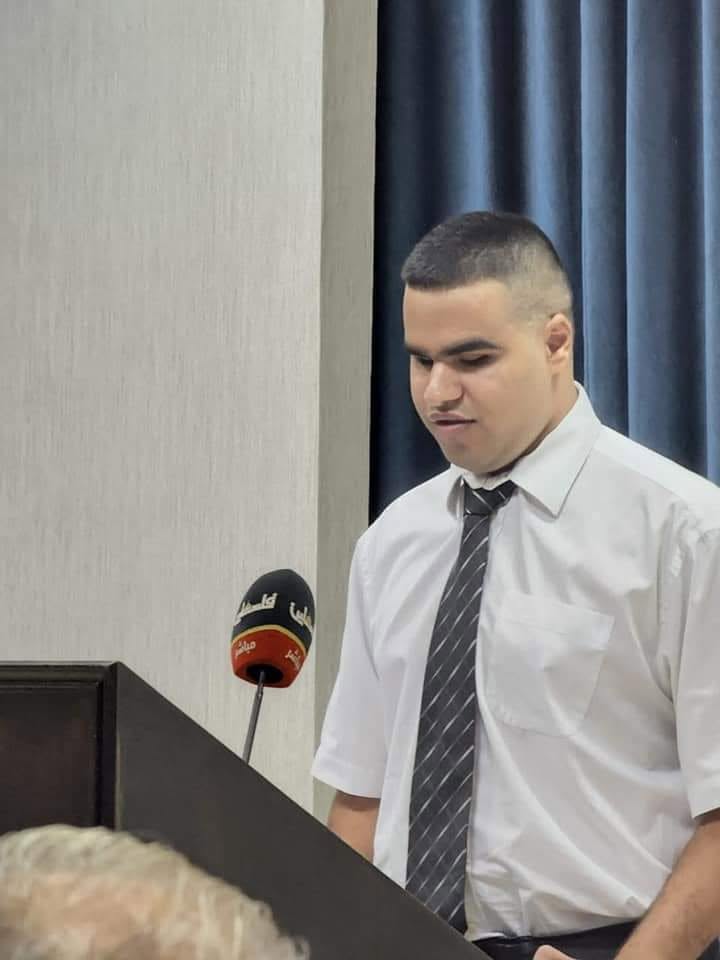
Someone will stand in front of the podium, look at the new numbers, and proudly announce:
We no longer have a single poor person.
And everyone will applaud.
Perhaps then we will remember that Ahmed Fouad Negm was not entirely joking when he joked.
For killing the poor does not always start with a bullet. Sometimes it starts with a much simpler idea: to convince ourselves, day after day, that his problem concerns him alone.
As for us?
We were just looking since the first line for an elegant way not to see him.