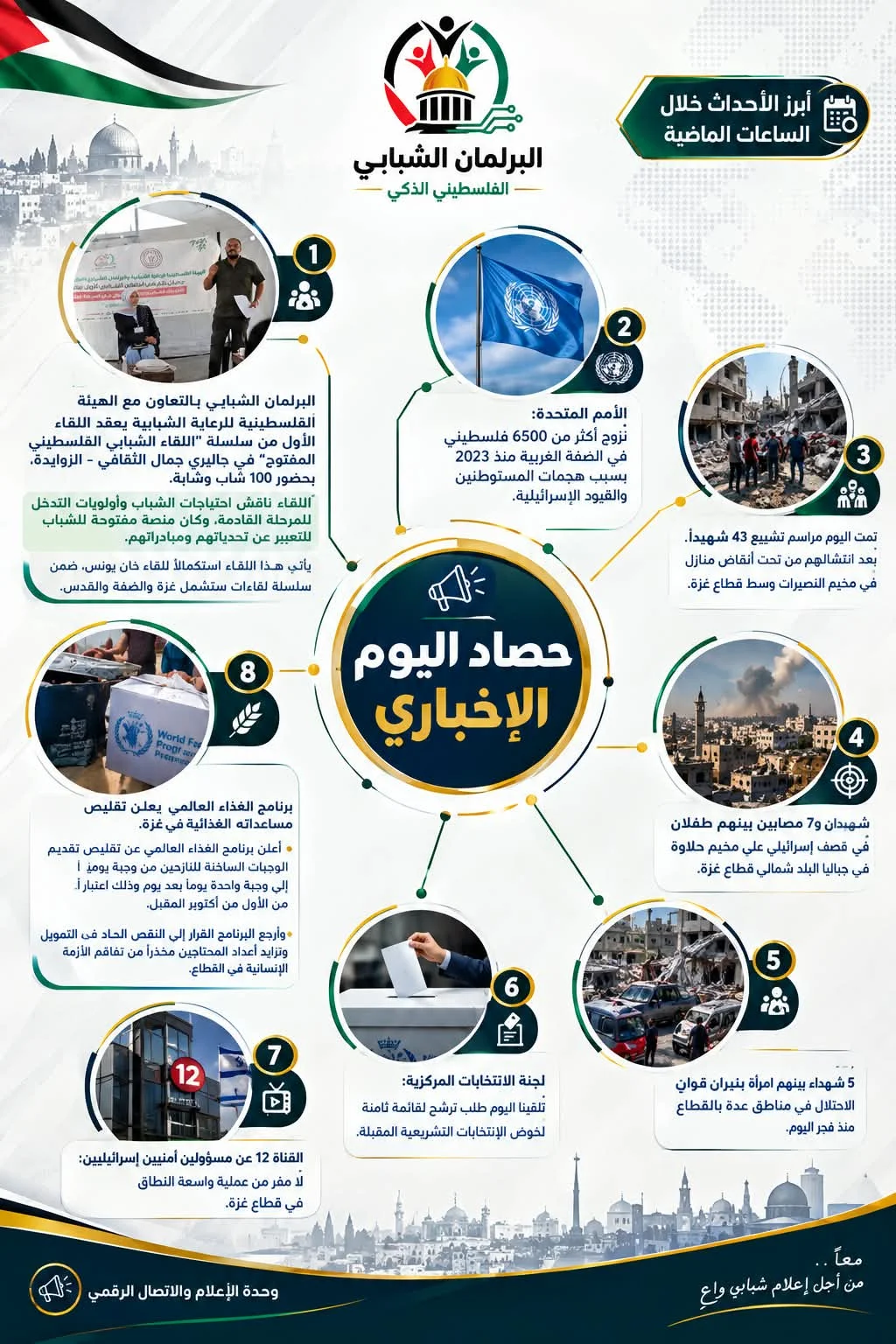
Elections... The Delay is Understandable… But Until When?

أخبار ومستجدات أخرى
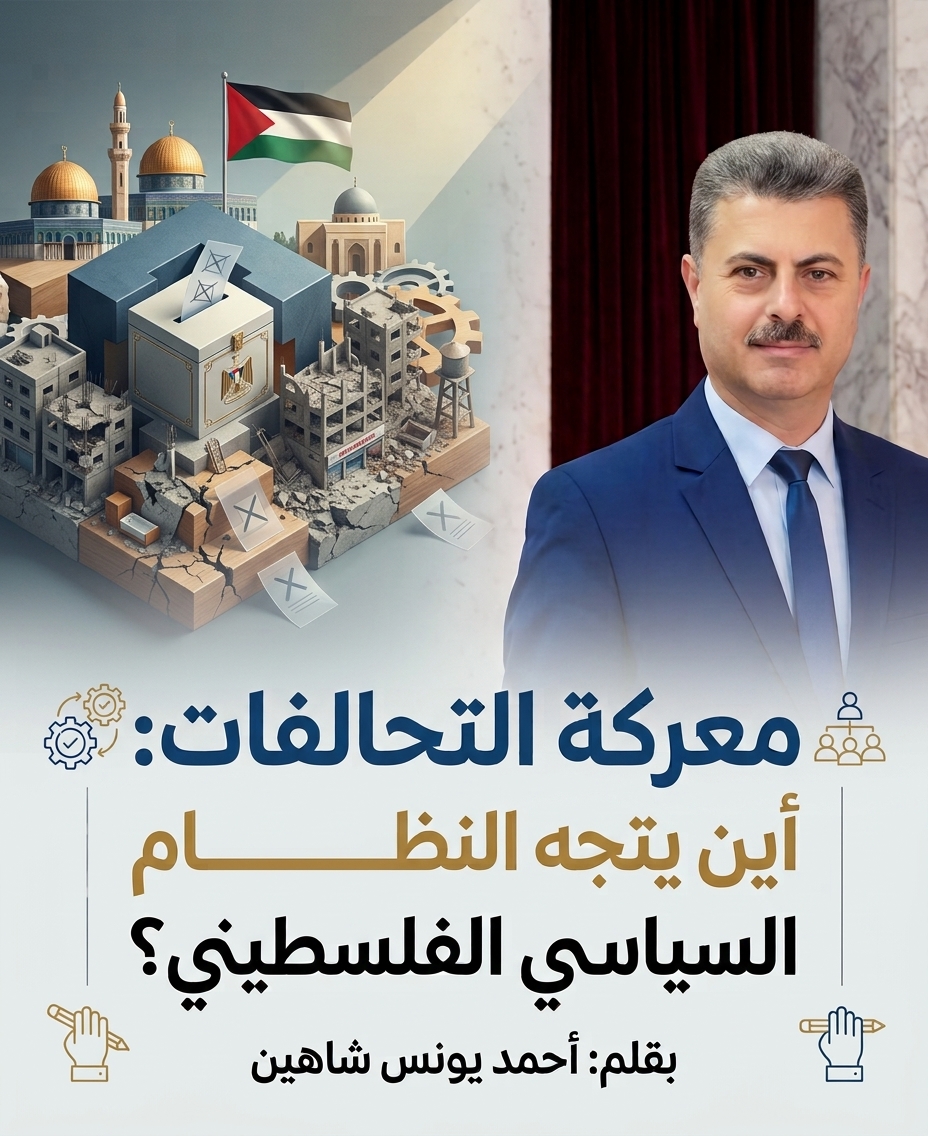
The Battle of Alliances: Where is the Palestinian Political System Heading?
By: Ahmad Younis Shaheen Journalist The Palestinian political system has witnessed rapid transformations that have led to the emergence of deep legitimacy crisis features affecting its various official and factional components. This coincided with the emergence of regional and international proposals and initiatives aiming to re-engineer this system to align with the "next day" scenarios for managing the Gaza Strip. These transformations are a result of the changing centers of geographical and political weight between the West Bank and Gaza; while Ramallah historically represented the administrative and decision-making center, developments on the ground in Gaza have imposed a new reality that has made the Gaza Strip the main axis for future political and security arrangements and initiatives linked to multiple international parties. Amid this structural crisis, the issue of Palestinian legislative elections is raised as one of the contentious paths to rebuild and enhance legitimacy and renew political elites. Despite the bet on the ballot box as a democratic tool to express popular will in the West Bank (including Jerusalem) and Gaza, the factional conflict over this entitlement does not stop at procedural aspects but is primarily centered on the struggle for alliances and the construction of new political alignments. Various forces seek to form broad fronts and cross-factional blocs to ensure a parliamentary majority, where the struggle intertwines between the desire of some parties to build alliances that protect their historical legitimacy and the direction of others towards formulating alternative national alliances capable of imposing a new equation that balances international community conditions and guarantees their political participation while excluding a movement that still holds the responsible and independent official Palestinian decision. This intense competition for engineering alliances makes any electoral step without prior political agreements a move that could deepen the existing impasse, in addition to external obstacles represented by Israeli intransigence and the prevention of voting in East Jerusalem. In this context, the Palestinian Authority faces dual challenges represented in its attempt to prove its institutional and security readiness to manage the sector and undertake administrative tasks there, at a time when it suffers from a decline in its actual influence and exhaustion of its procedural capabilities in the West Bank due to the rapid expansion of settlements and economic and legal pressures. In contrast, resistance forces face intense international and regional conditions aimed at excluding them from the official administrative scene and imposing disarmament as a prerequisite for funding reconstruction projects. External proposals push towards adopting alternative governmental formulas based on competencies or independent technocratic committees to manage daily life affairs away from factional tensions, as a compromise to overcome the representation impasse. However, these approaches face varying interpretations that see any administrative entity or legislative electoral process not based on a comprehensive national consensus and structural reforms in the Palestine Liberation Organization as lacking stability and continuity. Ultimately, it becomes clear that the Palestinian political system stands at a historical crossroads where externally imposed regional arrangements intertwine with positioning calculations and alliance building internally. The bet on technocratic committees as temporary solutions or the escape towards legislative elections governed by the struggle of political alignments without solid national consensus will represent nothing more than localized painkillers for a deeper structural legitimacy crisis. In light of these complexities, the real exit from the "next day" predicament remains contingent on the ability to formulate a unified Palestinian strategy that revives the Palestine Liberation Organization's charter and maintains the unity of Palestinian representation, balancing between the requirements of the international reality and the legitimate rights of the Palestinian street; otherwise, the scene is heading towards further institutional and geographical fragmentation that could undermine what remains of the pillars of the national project.