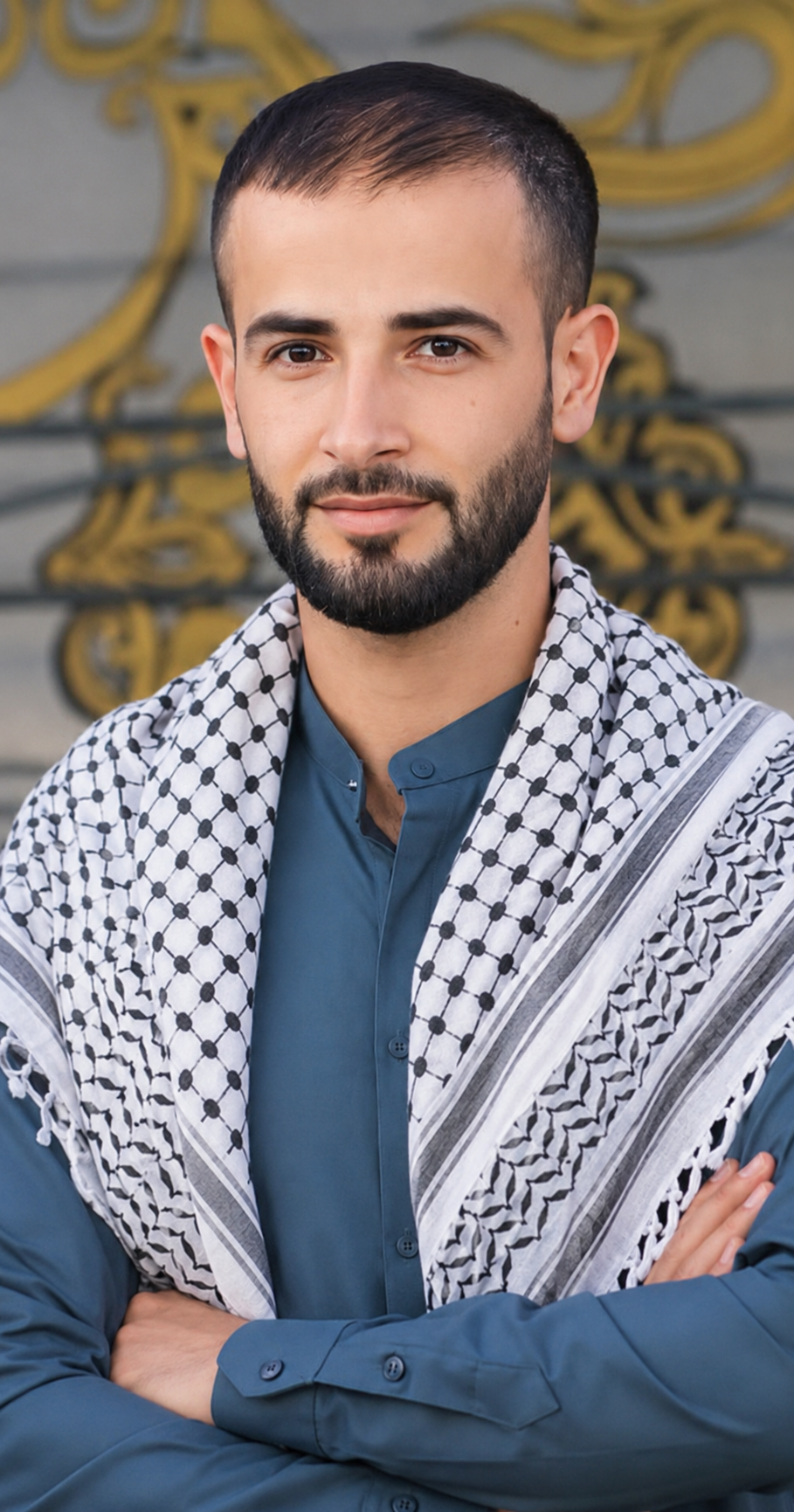
Legal researcher Mr. Abdullah Wrideh
After nearly two decades of absence, the discussion about Palestinian legislative elections returns to the forefront once again following the presidential decree setting Saturday, November 28, 2026, as the date for conducting legislative elections in Jerusalem, the West Bank, and the Gaza Strip.
Away from the legal and procedural details, the most important question that arises today is not only whether the elections will take place, but whether the Palestinian society is ready to restore its confidence in the electoral process? And is the authority truly ready to accept the results of the ballot box, whatever they may be?
If these elections take place, they will not merely be a routine constitutional obligation nor just a process to choose members of a new legislative council. They represent a significant political and moral test for the authority, factions, parties, civil society, and the Palestinian citizen above all. Elections are not just a ballot box or a day when citizens go to cast their votes; they are a contract of trust between the citizen and governance institutions, where the citizen grants their vote to whom they see fit to represent them, and in return, the authority commits to respecting this choice, regardless of the outcomes.
Here lies the most important issue. The Palestinian citizen, who has been deprived of legislative elections for all these years, enters the upcoming phase burdened with many questions and doubts. Therefore, the trust needed for the upcoming elections cannot be assumed in advance but must be built through clear and tangible guarantees.
The authority faces a real test. The Palestinian Authority is facing a different kind of test this time. Conducting elections means opening the door for citizens to voice their opinions, which also means that the results may not necessarily align with what the authority or the existing political forces desire.
This raises a difficult question: Can the authority deal with the election results as a popular will that must be respected, even if the outcomes contradict its expectations? In my opinion, this is the essence of the test. The success of the elections is not measured solely by the turnout rate, the number of boxes opened, or the speed of announcing results, but primarily by the integrity of the process and secondly by the extent to which all parties respect its outcomes.
Do the political circumstances allow for elections? There is no doubt that the current Palestinian political circumstances are extremely complex, and conducting general elections amid division and difficult conditions, especially in the Gaza Strip, poses significant challenges. It is natural for some to say that the current conditions are not suitable.
But the question that must be asked is: When will the conditions be suitable? If Palestinians wait for ideal conditions, they may continue to wait for many more years. Ideal political circumstances may never come, and democracy is not only practiced in times of stability; it may be even more necessary in times of crises.
Therefore, I believe that the difficulty of the circumstances should not be a permanent excuse to postpone elections but should rather motivate the establishment of stronger and more transparent guarantees and procedures to address the obstacles that may face the electoral process.
Fear of election results should not be a reason to cancel them. It is natural for some political forces to fear the results of elections, as elections inherently imply the possibility of winning and losing. However, true democracy begins when political forces accept that the people hold the final decision. It is not democratic to call for elections when we believe we will win and then reject them when indicators suggest we may lose.
Democracy is not about the victory of those we support but about accepting the right of others to win. From here, the principle must be clear: No one has a guarantee of victory, and no one has the right to usurp the citizen's choice.
The citizen also bears responsibility, but this responsibility is not solely on the authority. The Palestinian citizen themselves faces a real test. Legislative elections are not elections to choose a family representative, nor a mediator for transactions, nor a person who provides individual services. The deputy is a representative of the people, and their mission is legislation, oversight, accountability, and defending the public interest.
Therefore, the citizen must choose based on competence, integrity, programs, and the ability to bear responsibility, not based on kinship, family affiliation, or personal interests. We cannot demand a strong legislative council while we choose candidates solely because they are related to us or from our family or region.
The most dangerous scenario is not just the failure to conduct elections but that elections are held, and then the citizen emerges feeling even more distrustful. To feel that the results were predetermined before reaching the ballot box or that the elected council will not be able to perform its true role or that elections become merely a facade to reproduce the same political reality. In this case, the loss will be greater than just a political loss; it will be a loss of the very idea of democracy itself.
Therefore, transparency must be higher than ever, the electoral process must be subject to oversight, candidates must enjoy equal opportunities, and citizens must be able to exercise their rights without pressure, threats, or illicit influence.
Elections are an opportunity, not a threat. In my view, the Palestinian Authority should not view elections as a threat. An authority that derives its legitimacy from genuine elections is stronger, not weaker. An elected legislative council is more capable of exercising its oversight and legislative role. A citizen who feels that their voice matters becomes more connected to state institutions.
On the other hand, the continuation of political stagnation means the widening gap between the citizen and institutions. Therefore, if elections are free and fair, they should not be in favor of a specific faction, party, or political entity but should be in favor of Palestine.
What do we want from the 2026 elections? We want elections where candidates do not fear their competitors, and citizens do not fear exercising their rights. We want elections where competition is based on programs and competence, not on influence, money, or family ties. We want a legislative council capable of legislation, oversight, and accountability. We want a deputy who feels that their position is a trust, not a privilege. And we want a political authority that clearly states that the people are the source of legitimacy and that the ballot box is the arbitrator.
A final word: The upcoming legislative elections may be one of the most significant Palestinian political milestones in recent years. They may represent a real opportunity to rebuild trust between the citizen and the political system. Conversely, they could merely be another electoral stop if not accompanied by a genuine political will to respect the results of the ballot box.
Thus, the question should not only be: Does the authority fear the results of the elections? But should also be: Does the authority trust the Palestinian citizen to the extent that it allows them the right to choose who represents them?
In turn, the citizen must ask themselves: Will I use my voice to choose who truly represents me, or will I leave my voice to family, party, or influence? Democracy is a shared responsibility; the authority is required to trust the citizen, and the citizen is required to wisely use that trust.
If Palestine needs anything today, it is a genuine popular legitimacy, strong institutions, a legislative council capable of oversight and legislation, and a political life that restores to the citizen the feeling that their voice is not just a paper placed in a box and then forgotten. The conditions may not be ideal for conducting elections, but perhaps ideal conditions will never come. Therefore, the real challenge is not to hold elections under difficult circumstances but to make elections a means to emerge from these circumstances, not a victim of them.
In the end, the ballot box remains the place where the authority's fear meets the citizen's trust.