The Alamein meeting is not like its predecessor... and what follows will not be like what came before it
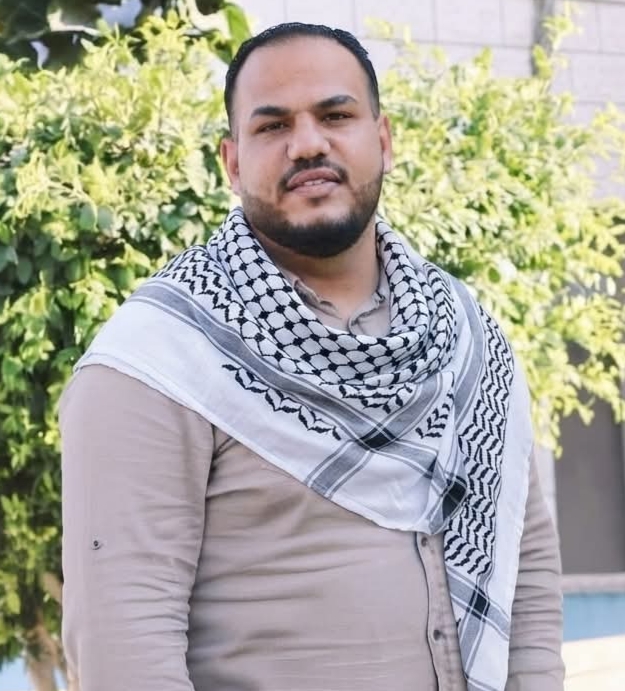
By: Dr. Abdul Karim Abu Mustafa
Despite the importance of unifying Fatah, and the necessity for it to remain strong, effective, and cohesive, as it is a fundamental pillar in the tent of Palestinian national action, the Alamein meeting that brought together a delegation from Fatah's leadership with a delegation from the Democratic Reform Stream deserves a reading that goes beyond the circulating headlines about "Fatah reconciliation."
Politics is not only read from the statements issued after meetings, but also from the identity of those sitting at the table, the timing of the meeting, and what each of them represents within the Palestinian equation.
Six figures... and a table that was not ordinary
The two delegations that sat at the table were not merely protocol delegations.
The Fatah delegation was headed by Hussein Sheikh, the Deputy President of the State of Palestine and Deputy Chairman of the Executive Committee of the Palestine Liberation Organization and Deputy Chairman of Fatah, positions that place him at the core of Palestinian and Fatah decision-making today.
Next to him sat Rouhi Fattouh, the President of the Palestinian National Council, and one of the sons of the Fatah experience that has extended since the late 1960s, who previously held the presidency of the Legislative Council and temporarily presided over the National Authority after the departure of President Yasser Arafat.
The third member of the delegation was Major General Majid Faraj, the head of the General Intelligence Service and a member of the Central Committee of Fatah, with extensive experience in security and political files and Palestinian reconciliation dialogues, including the dialogues that took place in Cairo during previous stages.
On the other side, the Democratic Reform Stream delegation was headed by Samir Mashharawi, the Deputy Head of the Stream and one of its most prominent political leaders, who is today a key figure in managing the Stream's files and its relations with Palestinian forces.
Next to him was Majid Abu Shamala, a member of the Legislative Council representing Fatah, who has an organizational and parliamentary background and has previously worked in various Fatah positions, alongside his experience as a former prisoner in the occupation's prisons.
The third figure was Dr. Osama Al-Fara, the former governor of Khan Younis, a well-known Fatah and political figure in the Gaza Strip, representing an extension of a political and administrative experience linked to the movement and the Palestinian Authority.
This composition alone says a lot.
We are faced with a Fatah delegation that brings together the highest political leadership, the presidency of the national legislative institution of the PLO, and the security institution, while on the other side is a delegation from the Reform Stream that combines political and organizational leadership and parliamentary and administrative expertise, with a clear presence from the Gaza Strip.
Therefore, reducing what happened to a public relations meeting would be an incomplete reading.
What does it mean for these specific individuals to meet?
In my estimation, the choice of these names means that the meeting was not a passing exploratory session, but rather an attempt to place the file before figures who can convey positions to the highest levels of decision-making on both sides.
But here begins the more important issue.
Samir Mashharawi emerged after the meeting to confirm that the atmosphere was positive, but he simultaneously stated that unifying Fatah cannot be achieved through intentions and positive words, but rather requires decisions and practical measures, and that the points presented by the Stream would be carried by the Fatah delegation to President Mahmoud Abbas.
This specific point deserves attention.
Because it means, politically, that the meeting did not produce, at the moment of writing these lines, an executive agreement on organizational unity, but rather returned the file to the center of the final decision.
Here I believe that the real positivity of the Alamein meeting may be different from what some expect.
Perhaps the positivity lies in drawing the curtain
The issue of "unifying Fatah" has remained suspended for many years between initiatives, mediations, meetings, leaks, and wishes.
And each time the question returned:
Will the Reform Stream return to Fatah?
Will the decisions of dismissal be addressed?
Will the leaders and cadres return?
Will there be a comprehensive organizational reconciliation?
But after the Alamein meeting, I tend toward a different reading:
Perhaps the most important positivity in this meeting is that it placed these questions before their final test, and drew the curtain on a long phase of political and organizational ambiguity.
Either the declared will transforms into clear decisions and actionable measures, or it becomes necessary to acknowledge that the concept of unifying the movement according to the old formula is no longer politically viable as it was previously proposed.
And this is not necessarily a negative thing.
Politics sometimes needs to resolve suspended files more than it needs to keep them under the title "dialogue continues" for years.
Fatah is bigger than its disagreements
I believe that the strength of the Fatah movement is not merely an internal Fatah issue.
Fatah is a central part of Palestinian political history, and its strong and cohesive presence is essential for the stability of the Palestinian political system, just as weakening it or continuing to drain it internally will not serve the national project.
But true unity cannot be made through collective images or political niceties.
Unity requires a decision, will, program, institutions, and clear rules to address accumulated organizational and political disagreements and rights.
From here, saying that the unity of Fatah is important does not mean that we remain prisoners of a single formula for this unity.
If returning to a single organizational framework is impossible, it may become necessary to search for a new formula for the relationship: a political understanding, national partnership, electoral coordination, or an agreement on rules for managing differences without turning the Fatah disagreement into a permanent drain on the movement and the Palestinian national scene.
Alamein and the elections... a question that cannot be ignored
The meeting cannot be separated from the upcoming political and electoral entitlements.
Mashharawi also spoke about the elections and the necessity that alliances should not be directed against Fatah or the head of the movement.
This raises a more sensitive question:
If organizational unity is not achieved, will the relationship between Fatah and the Reform Stream shift from seeking integration to seeking to organize competition?
Here lies one of the most important outcomes of Alamein.
Instead of the two parties spending years discussing returning to the same organizational home, perhaps the upcoming discussion will relate to how to manage the existence of two forces belonging to the same Fatah school, but moving within two different political and organizational frameworks.
What comes after Alamein
From here, I see that the question after the meeting is no longer:
When will the two sides of Fatah unite?
But perhaps it has become:
What will be the nature of the relationship that will arise between them if unity is not achieved?
Will it be a confrontational relationship?
Or electoral competition?
Or political coordination?
Or a partnership in some national files while maintaining organizational independence?
And these questions are not a small detail, as they relate to the future of Fatah itself, to the elections, to the Gaza Strip, to rebuilding the PLO, and to the future of the entire Palestinian political system.
Egypt... not just a place for a meeting
It is also important to note that the meeting was held under Egyptian sponsorship.
Historically, Egypt is not a mediator far removed from the details of the Palestinian file, especially in the files of Gaza, reconciliation, and national dialogue.
Therefore, holding the meeting on Egyptian soil, and at this level of representation, means that Cairo still sees the arrangement of the Palestinian house, and within it the Fatah house, as an issue linked to Palestinian political stability and what will come in the next phase.
However, mediation, no matter how significant, can bring the parties to the table; but the decision for unity can only be made by its owners.
The Alamein meeting is not like its predecessor
For this reason, I believe that the Alamein meeting should not only be measured by the question: Did reconciliation succeed or fail?
Perhaps its historical function is different.
Perhaps it came to tell both parties and the Fatah street that a whole phase has reached its end, and that the time has come either to make a decision, or to move to a new political formula.
Thus I say:
The Alamein meeting is not like its predecessor, and what follows will not be like what came before it.
Either the points carried by the Fatah delegation to President Mahmoud Abbas become an entry point for real decisions that practically reopen the unity file, or Alamein may have quietly drawn the curtain on the concept of Fatah reconciliation in its old form, and the beginning of a new phase titled managing the relationship between two parties, each of which has its own political and organizational reality.
In either case, the most important thing remains that Fatah disagreements do not turn into a Palestinian loss.
For Palestine today is in dire need of a strong Fatah, a strong Liberation Organization, a political system capable of accommodating everyone, and a genuine transition from managing divisions to managing differences under the roof of national interest.
And perhaps this is the real test of what comes after Alamein.
Dr. Abdul Karim Abu Mustafa